
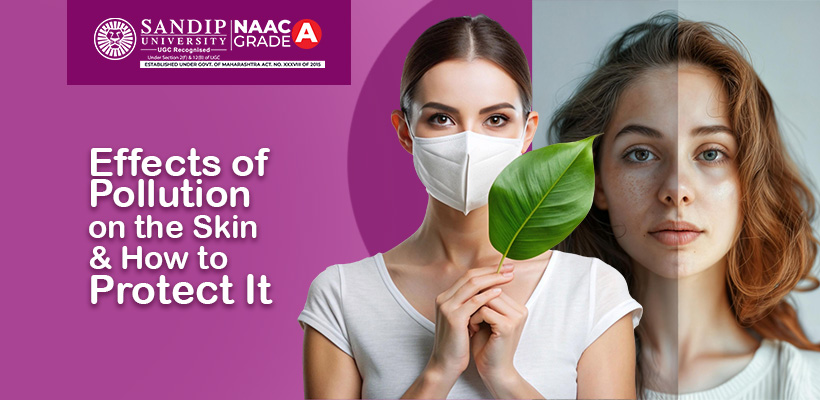
With the increase in urbanisation, pollution has now become a part of everyday life. Our surroundings are full of pollutants like emission from vehicles, smoke from industries, harmful chemicals and dust that are continuously affecting human health. These pollutants drastically impact respiratory and cardiovascular systems are widely discussed and researched but its effect on skin health is often ignored. As skin is the largest organ in the human body and it’s the first line of defense against the external environment. Therefore, it is necessary to understand how pollution affects the skin and how it can be protected from the environment for protecting and maintaining healthy skin. Some of the best beauty cosmetology colleges in Maharashtra are driving cutting-edge research in minimising the impact of pollution on skin.
Before we start with the effects of pollution we need to understand the types of pollution. As we know there are various types of pollution, namely air, water, soil, noise, etc. But in this case, we need to learn about air pollution as it is a major culprit in skin damage. Pollutants such as particulate matter, nitrogen dioxide, sulfur dioxide, ozone, polycyclic aromatic hydrocarbons are commonly found in air. These pollutants can easily come in contact with the skin’s surface, and this exposure over time can weaken and disrupt the skin barrier and lead to different skin conditions.
Impact of Pollution on the Skin
First is oxidative stress, this is one of the foremost ways that pollution affects the skin. When the pollution comes into contact with the skin it generates skin radicals, these free radicals in turn damages the skin cells by breaking down collagen, elastin and lipids from the skin. This oxidative damage increases the signs of aging, like increased wrinkles, fine lines, dullness, and loss of elasticity. Prolonged and unprotected exposure can make the skin look tired, dull and look prematurely aged.
Second is the skin barrier, the pollution’s effect on the skin barrier, it weakens it. The skin barriers become weak and compromised which can in turn allow pollution and irritants to penetrate deeper into the skin. With this the skin becomes dry, sensitive and prone to irritation and allergies, etc.
The next effect is acne and skin inflammation. The skin sweats, is covered in sebum and contains dead cells which can clog pores and add pollution to the mix can lead to severe build up and promotes bacterial growth and inflammation. As a result, it leads to acne breakouts, blackheads, and skin irritation. This specifically affects individuals with oily and acne-prone skin.
Next is uneven skin tone and hyperpigmentation. Prolonged exposure to pollution can stimulate melanin which can lead to hyperpigmentation. Excessive melanin can lead to dark spots and uneven skin tone.
Dehydrated and dull skin is another effect of pollution. Pollution tends to disrupt skin natural moisture as the pollutants disrupt the lipid layer of the skin allowing moisture to escape. It makes the skin dull and rough, and the skin usually lacks natural healthy glow.
Excessive exposure to pollution can lead to increased sensitivity and makes the skin prone to allergies. Pollutants can trigger inflammatory responses, this can lead to itchiness, irritation, redness and sensitivity. Individuals with eczema or dermatitis usually experience flare ups when exposed to pollution.
How to Prevent Skin Damage from Pollution?
With the world that we are living in pollution cannot be avoided but taking proper care of your skin and having some lifestyle changes can minimise the effect.
Firstly, cleansing the skin properly is the most important step in protecting the skin. A gentle cleanser can help remove the dust debris, excess oil, and impurities accumulated throughout the day.
Secondly, using antioxidant rich products can be crucial in reducing damage caused by oxidative stress. Products containing ingredients like vitamin C and E, green tea etc. can be very effective.
Next is to properly maintain the skin barrier so that it can protect the skin from pollutants. Using moisturisers containing ingredients like ceramides, hyaluronic acid and glycerin, which can help repair and maintain the skin barrier.
Most importantly, applying sunscreen applying a broad-spectrum sunscreen helps to protect the skin from UV rays and environmental damage.
Next is to avoid touching your face frequently, our hands are contaminated with all sorts of pollutants and bacteria and touching your face with these hands frequently can increase the skin of irritation and breakouts. Therefore, maintain proper hygiene and avoid unnecessary contact with the face.
It is important to maintain a healthy diet and to stay hydrated that can maintain skin health. So, it is important to eat foods rich in Vitamin C and A, omega-3 fatty acids and staying hydrated can help maintain the skin barrier.
The most effective way to protect yourself from pollution is to cover up, wear protective gear like sunglasses, scarves, hats, etc. to protect the physical barrier of the skin.
Conclusion
As urbanisation is increasing and pollution levels are increasing, being aware of the effects of pollution on the skin and once overall health is important. By taking few measures and consistently caring for the skin and health, one can maintain healthier, stronger and more resilient skin and body and be ready to face these challenges.