
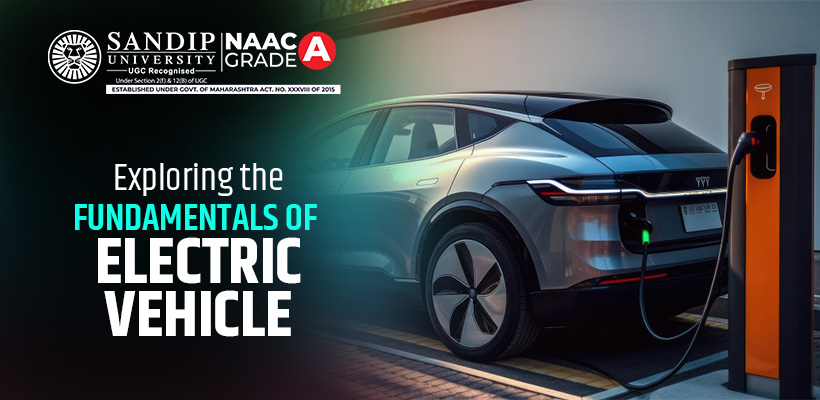
An Electric vehicle is a vehicle which is run on electricity. An electric vehicle is defined as a mode of transportation that operates utilising electrical energy. Prior to the advent of fully electric vehicles, Hybrid electric vehicles were in existence.
A hybrid electric vehicle is defined as a vehicle that integrates both an internal combustion (IC) engine and an electric propulsion system to operate. Some of the top engineering colleges in Nashik offer excellent degree programs in electrical engineering to boost innovation in electric vehicles.
Though the concept of electric vehicles has been around for a long time, it has drawn a considerable amount of interest in the past decade amongst a rising carbon footprint and other environmental impacts of fuel-based vehicles.
An electric vehicle may be powered through a collector system by electricity from off vehicle sources or may be self-contained with a battery, solar panels, fuel cells or an electric generator to convert fuel to electricity.
Different Types of Electric Vehicles
- Plug in Electric vehicle
- On and off-road EV
- Space rover vehicles
- Seaborne EV
- Airborne Electric vehicle
- Electrically powered spacecraft
- Range extended EV
- Rail borne EV
Plug in EV is the vehicle which is recharged by a source of electricity. For example, wall sockets, Rechargeable battery packs drives.
Plug in EV can be classified into two types:
- Plug in hybrid vehicle
- Battery Electric vehicle
Government Schemes and Initiatives for Adoption of Electric vehicle
- In February 2019, the FAME II scheme was coming. This scheme was implemented from 1st April 2019. The important goal or aim of this scheme is to nurture the adoption of electric vehicles and hybrid electric vehicles by providing benefits on the purchasing of electric vehicles.
- In 2013, India revealed the National Electric Mobility Mission Plan (NEMMP) 2020’ to make a major shift to electric vehicles and to address the issues of national energy security, vehicle pollution. This scheme was to provide subsidies and develop supporting infrastructure for Electric vehicles.
At the time Electric vehicles were invented, there were many challenges for the adoption of Electric vehicles. Some of challenges are as below:
- Initial cost: Electrical vehicles were much more expensive than petrol diesel powered vehicles initially because of battery technology.
- Range stress: Most of the consumers expressed concerns regarding the distance that electric vehicles can travel on extended journeys.
- Charging infrastructure: Initially due to inadequate charging infrastructure which led to consumer concerns regarding the availability of charging options.
- Charging speed: At the onset of electric vehicle adoption, the rate of charging was comparatively slow and time consuming, leading to concerns among consumers regarding charging efficiency.
But in now a day’s some modern innovations in electric vehicle are being made, such as:
- Enhanced range and charging speed: With advances in battery technology and BMS system, the average electric vehicle will be able to travel more on a single full charge than ever before. As well as, charging times will minimise significantly, making it even easier to keep your electric vehicle charged and ready to go.
- Reasonable price: Electric vehicles are now available at reasonable prices and available in many varieties because battery technology is focusing on reducing cost and increasing density.
- Charging infrastructure: When electric vehicles were first developed, the charging infrastructure was inadequate, leading to consumer concerns regarding the availability of charging options but nowadays there is adequate charging infrastructure.
- Technology shifts: Nowadays energy is the most powerful measure in the world. Without energy nothing will happen which means energy is the prime mover of economic growth so for energy management the trends include vehicle to grid (V2G) and vehicle to building (V2B) technologies are developed.
Some of the broad categories of vehicles that come under this category like trucks, cars, buses, motorcycles, bicycles, forklift, etc.
Advantages of Electric Vehicle
Electric vehicles or Electric cars have several environmental benefits compared to conventional internal combustion engine cars.
- Electric vehicles minimise carbon emissions
- Minimise dependency on petroleum or diesel fuels
- No pollutants from their exhaust
- Electric vehicles have better efficiency
- Internal combustion engines will consume fuel even when the vehicle is stationary, but in electric vehicles the energy is not consumed when it is stationary
- Electric vehicles tank to wheel efficiency is about a factor of three higher than internal combustion engine vehicles
Conclusion
Electric vehicles are a way to the future which reduces the use of carbon emission fuels like petrol and diesel. It will also bring about a green revolution on the earth. The batteries that charge on electric power are getting better and better all the time. In the future, the demand of EV will rise and ultimately EVs will become cheaper than today. Many professionals holding a M.Tech in Electric Vehicles are driving a revolution in the EV industry.
The Indian government is also helping people to buy Electric vehicles. The Indian government launches plans like the FAME II Scheme and the National Electric Mobility Mission Plan 2020. Electric vehicles are an important and more efficient way to get around. EVs are good for the earth. Also help us have a better transportation system. EVs are the way of the future.