
What Are Emerging and Re-emerging Infectious Diseases?
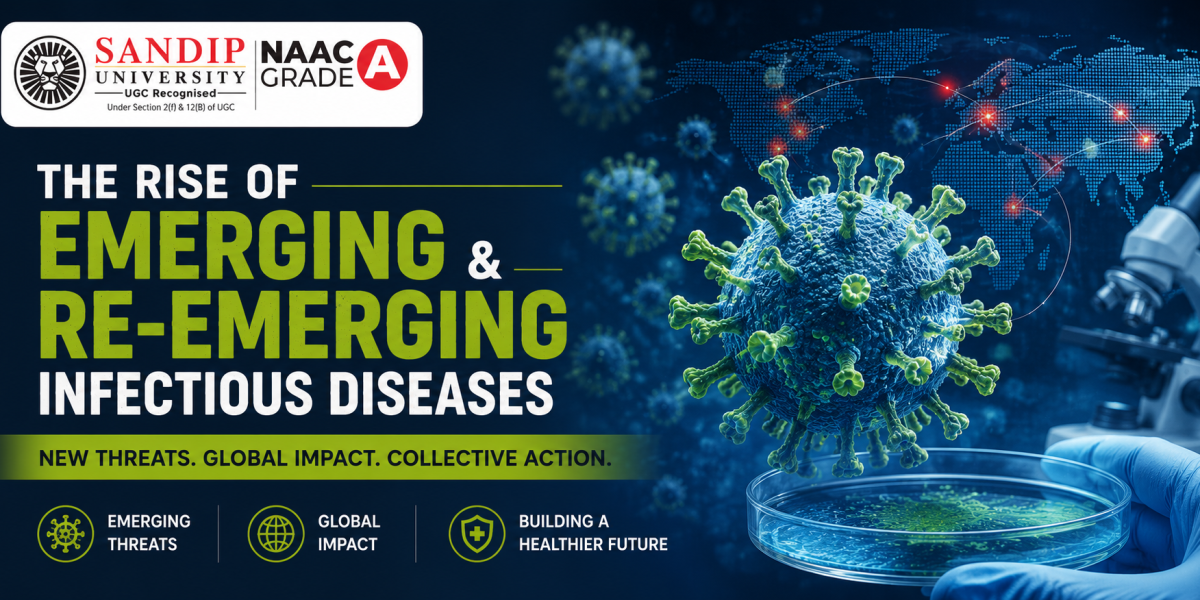
Today our world seems small, compact, reduced in size. We can reach the other side of the world in no time. Unfortunately, so can pathogens. It is tempting to think that humanity has reached such a high level of technological and scientific development that it can handle any situation, but no later than a few days or weeks after sighing with relief, yet another disease turns up, or an old man returns to haunt. COVID-19 was only one example of such an event. Microorganisms have their will, and it does not depend on our desires or the degree of our development. However, pathogens are not just a biological or medical phenomenon. Their appearance and mass reproduction can lead to social, economic, health, cultural, dietary, and political consequences. To prepare for future pandemics, it is necessary to know where they come from and what their “road to mankind” is. What are “emerging” and “re-emerging” infections? This is something that is taught in some of the best microbiology colleges in Nashik.
Examples of Emerging and Re-emerging Infectious Diseases
Emerging infections are understood as organisms that somehow appeared in the human population, that is, presented for the first time, or previously known infections that have disappeared and are found again. Sometimes it refers to an infectious disease that has “come from animals.” By animal, it means those creatures that are connected to humans through contacts: either an infected animal is close to a person, or a person visits natural habitats, thereby exposing himself to pathogens that have previously acted exclusively in animals. Sometimes it means a change in an infectious agent that has appeared in humans – for example, a virus that has changed its properties.
The term “re-emerging infections” implies a return to widespread prevalence after a period of decline due to a decrease in the number of cases or even complete temporary disappearance. Causes of this comeback may be the relaxation of precautions, the appearance of resistance to narrow-spectrum antiviral or antimicrobial drugs, changes in the environment, or a reduction in the quality of health care. It is known that our world is faced by emerging and re-emerging infectious diseases. Nipah virus, Ebola, COVID -19, Zika, are some of the examples. Unfortunately,old acquaintances such as tuberculosis, dengue fever, measles, cholera, and malaria, are also included in the list.
Why Do Emerging Infectious Diseases Occur?
The problem of the appearance and re-emergence of infections is complex, and the causes of these phenomena can be very diverse. They may include:
- The interaction of humans with animals: Since more than three-quarters of newly discovered infections come from animals, habitat fragmentation, biodiversity loss, or other anthropogenic activities can lead to an increased exchange of pathogens between animals and humans.
- Globalisation and increased population mobility: Globalisation and long-distance travel allow pathogens to spread rapidly around the world, causing serious social and clinical problems. In other words, the long-distance transfer of pathogens makes it possible for them to reach new fertile grounds before they are stopped and studied.
- Climate change: Global warming leads to the expansion of the distribution of many pathogens and parasites carried by arthropods.
- Antimicrobial resistance: Improper use of antibiotics leads to the gradual loss of their effectiveness against many pathogens.
- Megacities: Population growth, migration to big cities, a shortage of medical resources, and a lack of hygiene lead to the rapid spread of pathogens.
Lessons learned: what do we know now that we didn’t know before, and how should we act? The COVID-19 pandemic, which began at the turn of the 2020/21 academic year, presented humanity with many challenges, from clinical to social ones. Fortunately, society coped, managed to develop effective and high-specificity tests, quickly enough decipher the genome of the virus, create and widely immunise people with a vaccine, and establish optimal methods of isolation. The experience of combating the Ebola virus showed that it is necessary to develop high-quality and affordable tests and build a high level of trust among locals to control the spread of the disease. Moreover, it became clear that it is necessary to fight not only with rare but also with more common infections, the prevalence of which increases sharply due to a decrease in the immunisation rate of the population. In other words, an infectious disease threat is always there, but the earlier it is detected and combated, the lower its danger is. One of the most pressing problems is antimicrobial resistance:
“Antimicrobial resistance is an “invisible pandemic” threatening to undermine modern medicine…” – this is just one way to describe the situation in which resistance to antibiotics is developing and spreading among pathogens at an alarming rate. Microorganisms have a phenomenal ability to adapt, and the more antibiotics are used, the more they resist these substances. Antimicrobial resistance is an urgent problem because it extends the duration of treatment, increases the risk of hospital infection, increases health care costs, and reduces the quality of care. To solve this issue, there are several methods, namely:
- Optimisation of antibiotic use
- Infection control
- Development of new treatments
- Surveillance
Preparations: what technologies do we have at our disposal to predict and respond to future pandemics? Fortunately for humanity, there are many technological advances that allow for the rapid and accurate detection of pathogens. In particular, the development of test systems that allow testing large numbers of people at the same time, the use of real-time PCR technology, genome sequencing, and the use of artificial intelligence, which, using big data, can determine the slightest changes in the characteristics of pathogens and predict possible pandemics with high accuracy. At the moment, digital technology is taking over many responsibilities for monitoring health. Various online services collect and analyse data on a daily basis, looking for potential dangers.
Furthermore, introducing technologies such as social media helps in sustaining timely identification of anomalies. It should also be mentioned that prevention is better than treatment. The faster an outbreak is identified and actions are taken to avoid its expansion, the less dangerous it will be. Vaccination, in particular, is another reliable weapon against pathogens. In this respect, continuous compliance with high immunisation levels ensures safety for vulnerable groups. Another step to be taken is the provision of effective maintenance of health care and public health services. Finally, it is necessary to ensure effective communication, both to control the spread of infection and to prevent panic fuelled by misinformation.
All this leads to the need for joint actions in the context of combating pathogens – in short, “One Health.” The fact that many infections come from animals indicates the necessity of a multidisciplinary approach. Thus, “One Health” is an approach that officially recognises the health of humans, animals, and the ecosystem as interconnected, which allows for joint efforts to detect, prevent, and control potential health threats.
Conclusion: What is our world likely to face in the future?
Our existence coincides with that of pathogens: they do not disappear from our lives. The analogy with the relationship between prey and predators is obvious since viruses should be perceived as part and parcel of our ecological system. However, we have a chance to keep everything under control. Scientists constantly investigate the characteristics of the microorganisms used by viruses, which helps to identify what kind of pandemics we should be ready for in the future. We also need to build strong social security, organise communities to play their part in the health security system, and rely on the support and trust of the population.
Moreover, it is necessary to collect and analyse information on an ongoing basis so that scientists can work on new tools for combating pathogens. We need to remember that everything is connected. In a modern globalised world, the health and lives of billions of people are directly and indirectly related to each other. This means that society needs to build resilient health systems, social security networks, and community support systems to withstand all kinds of stress and work closely with scientists who study pathogens and develop new treatments.