
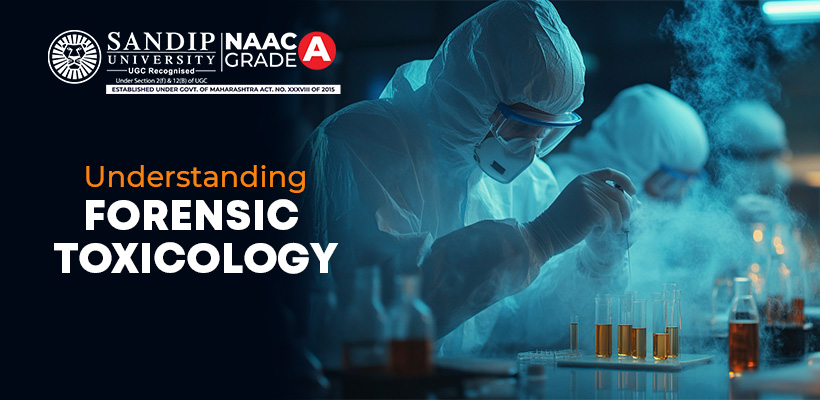
The word “toxicology” comes from the Greek word “toxicon”, which meant “poisonous substance”. Toxicology is an area of clinical medicine to do with poison as related to where it comes from, what it is like, how it works and so on, to include; symptoms, lethal dose, toxicity, diagnosis, treatment, and signs on postmortem issues. Some of the top forensic science colleges in Maharashtra include forensic toxicology in the course curriculum to train students on this topic.
A toxicologist studies the effects and provides data on the toxicity of substances to determine the risk to someone’s health if they consume them. A poison may be defined as a substance that can produce adverse effects or death when consumed in sufficient amounts. Toxicological studies of substances examine the cellular, biochemical, and molecular mechanisms through which they produce their adverse effects as well as their functional effects (e.g., neurobehavioral or immunological) when taken in sufficient amounts.
Classification of Toxicology
Toxicology encompasses several sub-fields and can be broadly classified into the following categories:
Analytical Technique: Detection, identification, and measurement of foreign compounds including poisons [xenobiotics] in biological and other specimens.
Aquatic Toxicology: Study of the effects of chemicals on aquatic organisms. Important because many aquatic animals are human food products, and poisons may pass through them to humans [ex Minamata disease].
Chemical toxicology: Study of the structure of poisons and their mechanisms of action.
Clinical toxicology [Medical toxicology]: It deals with causation, diagnosis and management of poisoning in humans.
Environmental Toxicology: Study of the toxic effects of pollutants in the environment, which includes all surroundings of living organisms, especially air, soil and water.
Toxicology Relating to Occupations: This type of toxicology studies how chemicals impact the health of employees while they are working. An example of this type of toxicology can be poisoning from lead (plumbing and printing) or from phosphorus (matchboxes and fireworks).
Forensic Toxicology: The role of forensic toxicology is to determine whether there is scientific evidence sufficient to create a link between exposure to drugs/chemicals and resulting deaths (or injuries).
Concept and Significance of Forensic Toxicology
Forensic toxicology refers to the use of normal toxicology to help with criminal investigation and assist in the administration of the law. Therefore, its purpose is primarily to assist in medicine and medicine design by providing information on the medico-legal effects of chemicals on both humans and animals.
Poisoning is a very common cause of medical emergencies throughout the globe. Therefore, it is important to have a precise identification of the poison in an individual or an individual that has passed away for both medical and legal reasons.
Poison will usually be found in a living individual in the urine, bloodstream or stomach contents. In deceased individuals, poisoning will usually be found in the stomach, bowel and the contents of viscera (organs) of the body. The vitreous humour of the eye is the best sample to collect from a deceased individual as it is not likely to degrade quickly.
Analytical Techniques in Forensic Toxicology
1. Spectrometric Methods: Absorption and emission are the two types that exist. In the former absorbed rays are analysed and in the later, emitted. Spectroscopic methods are much more rapid and much less time consuming. They give information which is recorded in the form of a permanent chart generally, in an automatic or semi-automatic manner. The structural information gained by spectroscopic methods is much more precise and reliable; they are highly reliable in establishing the identity of two different compounds. They are much more selective and sensitive and are extremely valuable in the analysis of highly complex mixtures and in the detection of even trace amounts of impurities.
2. Chromatographic Technique: Chromatography is probably the most important single analytical technique used today and probably continues to be so far the foreseeable future and it may be applied both quantitatively as well as qualitatively as it is primarily a tool of separation. Applications of chromatographic techniques to biochemical analysis were readily apparent. Chemical analysis of biological specimens is hard since they comprise a complex combination of constituents, several of which respond in the same way with reagents chosen to detect a specific compound. An extensive assortment of chromatographic procedures makes use of differences in size, charge, binding affinities and other properties. Many types of chromatography have been developed. These include column chromatography, high performance liquid chromatography, gas chromatography, size exclusion chromatography, ion exchange chromatography etc
Conclusion
Forensic toxicology, which connects the scientific and legal aspects, establishes connection through Cause/Effect; thus allowing for the determination and investigation of poisonings and deaths. A B.Sc in Forensic Science is a great undergraduate degree program for professionals who wish to build the right foundation for their career in this field.
As the use of chemicals becomes more prevalent in everyday life, studies are becoming fast-time and very important for both understanding how chemical substances affect the body and determining their effects on populations; establishing connections to miscarriages of justice, as well as improving the quality of life.
Analytical techniques and methods of instrumentation are always improving; due to the improvement in analytical techniques their relationship with Forensic toxicology has been increasing rapidly in both scope and significance. Forensic toxicology assists with the delivery of Justice; in addition, it serves to protect the public health and the environment through regulatory compliance.