
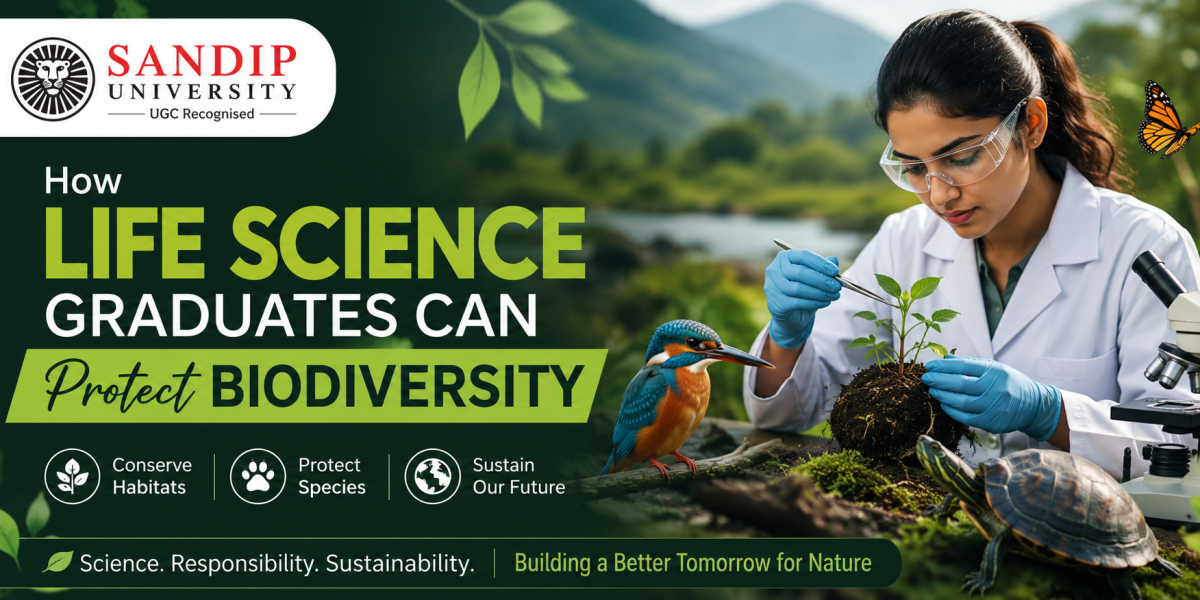
Nature is a web where lots of living things talk to each other every day. From bugs that live in the dirt to big trees, insects, birds, mammals and sea creatures every living thing does something important. This is what we call biodiversity the key to keeping the earth healthy. Because we are growing and changing so fast nature is in trouble. Some of the best life science colleges in Nashik are conducting research to ensure the protection of biodiversity.
Why Biodiversity Matters
Biodiversity is all the kinds of living things on our planet. It has three parts: the differences within each kind of living thing, the differences between each kind and the different homes they live in. Each part helps nature stay alive.
Every living thing has a job. Animals that hunt keep the numbers of animals under control, bees and other bugs help plants make seeds and tiny living things like mushrooms and bacteria break down dead things and put good stuff back in the soil. I think all these things working together make everything work right.
People need biodiversity too in ways we might not even think about. When the earth is healthy, we get water, good dirt to grow food, fresh air, medicine and weather that does not get unmanageable. When we hurt nature, these things start to go and that affects the food we eat, our health and our money.
Habitat Loss: The Greatest Threat to Biodiversity
Human activities are really bad for wildlife especially when we destroy their homes. We cut down forests to grow food, we drain wetlands to build things, we plow grasslands to make farms. We dig up the coast for hotels and houses. When the natural places get destroyed many animals lose the things they need to eat, live and survive the upcoming generation.
We also construct roads, factories, dams and cities which break up the habitats into pieces. This makes it hard for animals to move around, find food and have babies. When animals are alone, they can get sick. Their homes can get hurt. This also means they can lose the things that make them who they are.
Pollution and Its Impact on Biodiversity
Pollution is a problem that affects almost every place on Earth. The air from factories, the garbage we throw away, the chemicals from farms, the heavy metals and the plastic trash are all hurting our planet.
The chemicals we use to kill bugs on farms are also killing things, like birds, frogs and fish. Even a little bit of these chemicals can make it hard for animals to grow, have babies and survive.
Plastic waste is a problem for our planet. Animals in the ocean think plastic is food or they get stuck in fishing nets and plastic bags. This can hurt them, make them hungry or even kill them. The tiny pieces of plastic also spread to all the animals in the ocean. That is really bad, for them.
Climate Change and Changing Ecosystems
Climate change is really bad for our planet. It is affecting the ecosystems of the Earth. The Earth is getting hotter and hotter because of climate change. Climate change is a problem for the Earth. This is changing the way it rains and making storms. There are also bad droughts and the ice is melting. All of this is happening so fast that the animals and plants cannot get used to it. Human climate change is a problem for ecosystems all over the world.
Animals and plants tend to move to cooler places, or higher places. But many species cannot move. Polar animals are struggling because they have no ice to live on. Corals are turning white because the oceans are getting warmer. Things like flowers blooming, animals breeding and animals moving to places are happening at weird times. This is messing up the way animals and plants have always interacted.
Unsustainable Use of Natural Resources
Humans are hurting wildlife. I am getting killed by people who hunt, catch and cut down trees. People are catching a lot of fish and selling animals in a way. Many animals that are in danger and are being hunted for their body parts. Ivory, Horns, Skins, Scales are used to make medicines. Fishing is also very bad for our oceans. It removes species from the ocean. If one key species is removed it can change the entire ecosystem in a big way.
Moving Toward Biodiversity Conservation
Biodiversity is in trouble but people are doing things to help and it is actually working. The government and researchers and people who care about the environment and local people are all working together to protect places that’re really fragile. They are making areas, like national parks and places where animals can be safe and big areas of land and water that are protected so biodiversity is safe.
Conservation is best when it is part of development. We need to protect the environment and conservation is a part of that. To protect biodiversity and conservation we need to use resources in a way to control pollution, use renewable energy, practice sustainable agriculture, restore habitats and make sure laws against illegal wildlife trade are enforced.
Environmental education is also very important for conservation because it helps people and communities make choices that reduce their impact on the environment and conservation.
This way conservation and sustainable development can really work together to make a difference for conservation. Conservation is the key to making sure we have a planet and conservation is what we need to focus on. We need to make conservation a part of our lives and conservation and sustainable development go hand in hand. We need to make sure we are doing everything we can to protect the environment and conserve resources, for generations and conservation.
Career Opportunities for M.Sc. Life Science Students in Biodiversity and Wildlife Conservation
The worry about losing biodiversity and the environment getting worse is creating jobs for people who study Life Sciences. People who are getting a Master’s degree in Life Science can really help with saving wildlife, making ecosystems healthy again, keeping an eye on the environment and making sure we use resources in a way that’s good for the future. They can do this by doing research, teaching people and helping to make rules that protect the environment and Life Sciences.
1. Research Scientist
Research scientists or project associates usually work in universities, CSIR labs, DBT institutes, ICAR institutes, IISERs and environmental research organisations. These places mainly focus on saving biodiversity, studying ecology, understanding climate change and fixing ecosystems. They work on conservation of biodiversity. Scientists in these places also study how living things interact with each other and their environment, which is ecology.
Climate change is another area of focus. Restoration biology is also done to fix damaged ecosystems. Research scientists and project associates play a role in these areas. Universities and research organisations are places for this work. CSIR laboratories DBT institutes and ICAR institutes also do this kind of research. IISERs are involved too.
Environmental research organisations focus on these issues well. Biodiversity conservation is a goal. Ecology and climate change are studied closely. Restoration biology helps fix ecosystems. This work is crucial for our planet. Scientists and associates make it happen.
2. Wildlife Biologist
Wildlife Biologists or Ecologists are interesting people. They spend their time studying animal populations and ecosystems. This helps them come up with conservation strategies. Wildlife Biologists or Ecologists can work in lots of places. These places include government departments and wildlife sanctuaries. Wildlife Biologists do their job, in parks and non-governmental organisations. The Wildlife Biologists are trying to help the animal populations and the ecosystems of the Wildlife Biologists.The main goal of the Wildlife Biologists is to help the animal populations and the ecosystems that the Wildlife Biologists are working with.
3. Environmental Consultant
Environmental Consultants help industries and infrastructure projects do things like assessing the impact, on the environment surveying the biodiversity assessing the risks and ensuring that they follow the environmental rules. Wildlife Biologists work on Environmental Impact Assessments to help the environment. They do biodiversity surveys. They do risk assessments. They ensure compliance.
4. Conservation Officer or Forest Department Scientist
Conservation Officers or Forest Department Scientists work with organisations that restore habitats, conserve species, manage wildlife and manage areas.
5. Microbiologist
Then there are Microbiologists or Environmental Biotechnologists. They use technologies for things like bioremediation, waste management, pollution control and ecosystem restoration.
6. Academic and Teaching Careers
Some people have Academic and Teaching Careers. They work as Assistant Professors, lecturers or research mentors after passing examinations like CSIR-UGC NET, SET or after getting a Ph.D.
7. Science Communication and Environmental Education
There are also people who work in Science Communication and Environmental Education. They create awareness through outreach educational programs, biodiversity documentation and conservation campaigns.
The fact that we are focusing more on development, climate resilience and ecosystem restoration in our national and international environmental policies has created a lot of job opportunities in both the government and private sectors. If you have laboratory skills, field experience, knowledge of GIS and bioinformatics and you are good at research you will have a better chance of getting a job in this field that is changing very fast.
Conclusion
People are changing the world everywhere so we really need to protect the variety of plants and animals on our planet. This is a problem that scientists and everyone else needs to work on together. To help animals we need to work on things like studying the natural world using resources in a way that does not hurt the environment, teaching people about nature and making rules to protect the environment.
For students who are pursuing an M.Sc in Life Science, this is a chance to help take care of the environment and have a job that is fulfilling in many areas like studying the natural world, teaching, protecting the environment, working with living things, helping companies make environmentally friendly choices and working for the government.
If the next group of life scientists holding qualifications from some of the top science colleges in Nashik use their knowledge to take care of the environment, they can play a role in making sure we have lots of different plants and animals on the planet and that the future is okay, for people and the natural world.